


Hi No Such Thing Nation,
This week, I’m excited to finally share an episode that we started working on back in October 2025. It took hours of interviews, research, conversation, and self-reflection, and I hope that comes across in the final edit.
We’re talking about circumcision: Why do we do it? Should we do it? And why does this issue in particular seem to get people so intensely fired up? I find it to be an endlessly fascinating subject and I hope you do too, no matter where you fall on it.

(Apple, Spotify, YouTube, Others)
Our guests this week are Johns Hopkins epidemiologist Dr. Kate Grabowski, Vanderbilt University associate professor of sociology Laura Carpenter, and Intact America founding executive Georganne Chapin (You can buy her memoir This Penis Business here).
Dr. Grabowski lays out the history of the procedure in America, why it became so widespread, and explains the studies that have found it to reduce HIV transmission. Then, Professor Carpenter tells us how the anti-circumcision movement emerged at a time when there was a broader questioning of society: hippies, women’s health, patients’ rights and a general questioning of authority and bodily autonomy. Georganne Chapin, a leader in the anti-circumcision movement, makes the case against circumcision, arguing that it’s an overreach of parental consent. Lastly, we discuss changing attitudes towards circumcision, as rates continue to decline steadily. Take a listen and let us know what you think in the comments below.
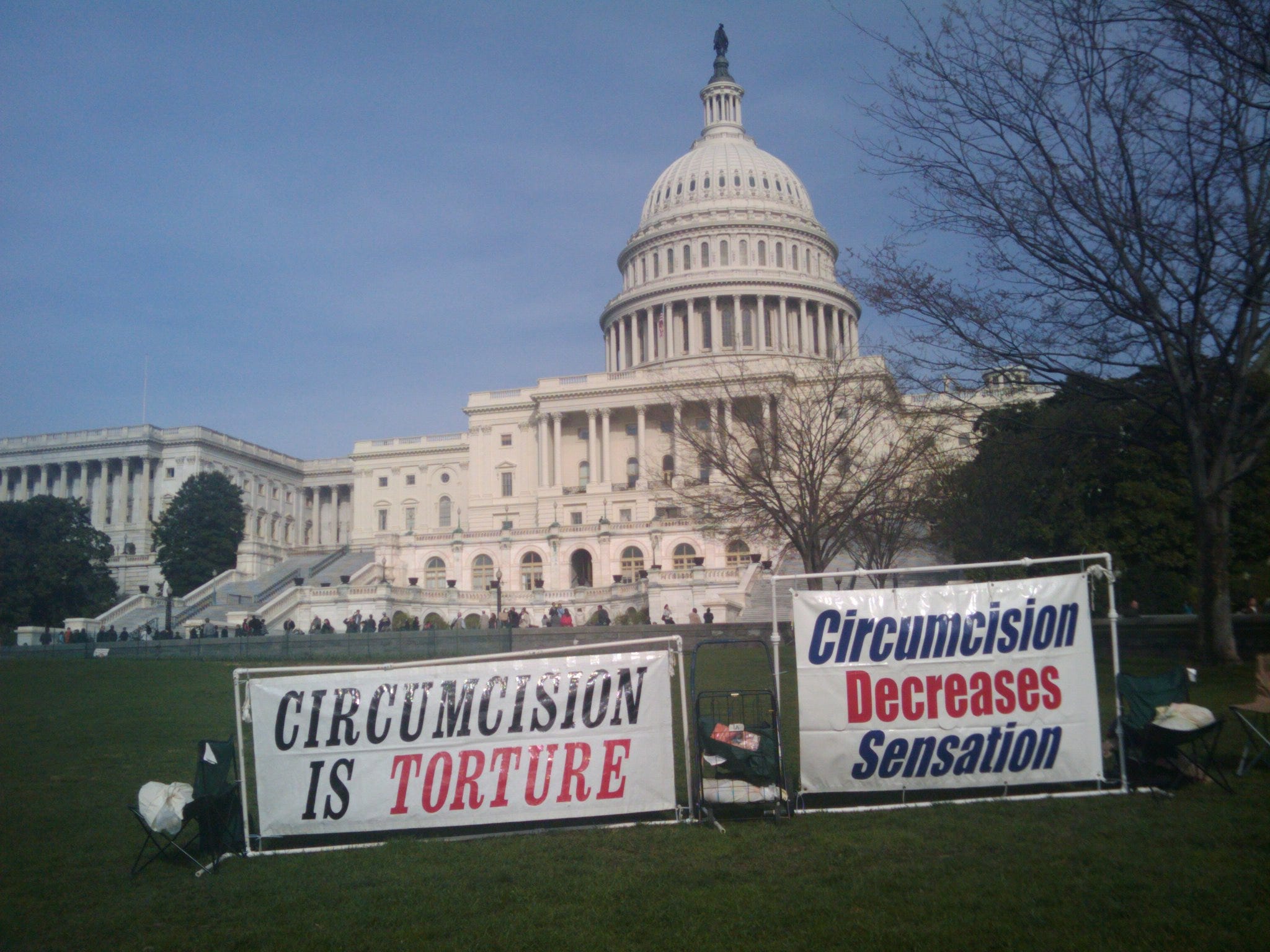
As always, due to time restraints, not everything can make it into the final episode. And as this is such a sensitive subject (no pun intended…), I tried to represent all sides of the issue fairly, respectfully, and with proper attention to detail. If you want to dig into the topic yourself, just scroll down to find medical research, arguments, counter-arguments, and much more. NST has no particular agenda to push here, so please take it all in and decide how you feel.
Further reading
Below are related links for further reading, roughly corresponding to the order in which they appear in the episode.
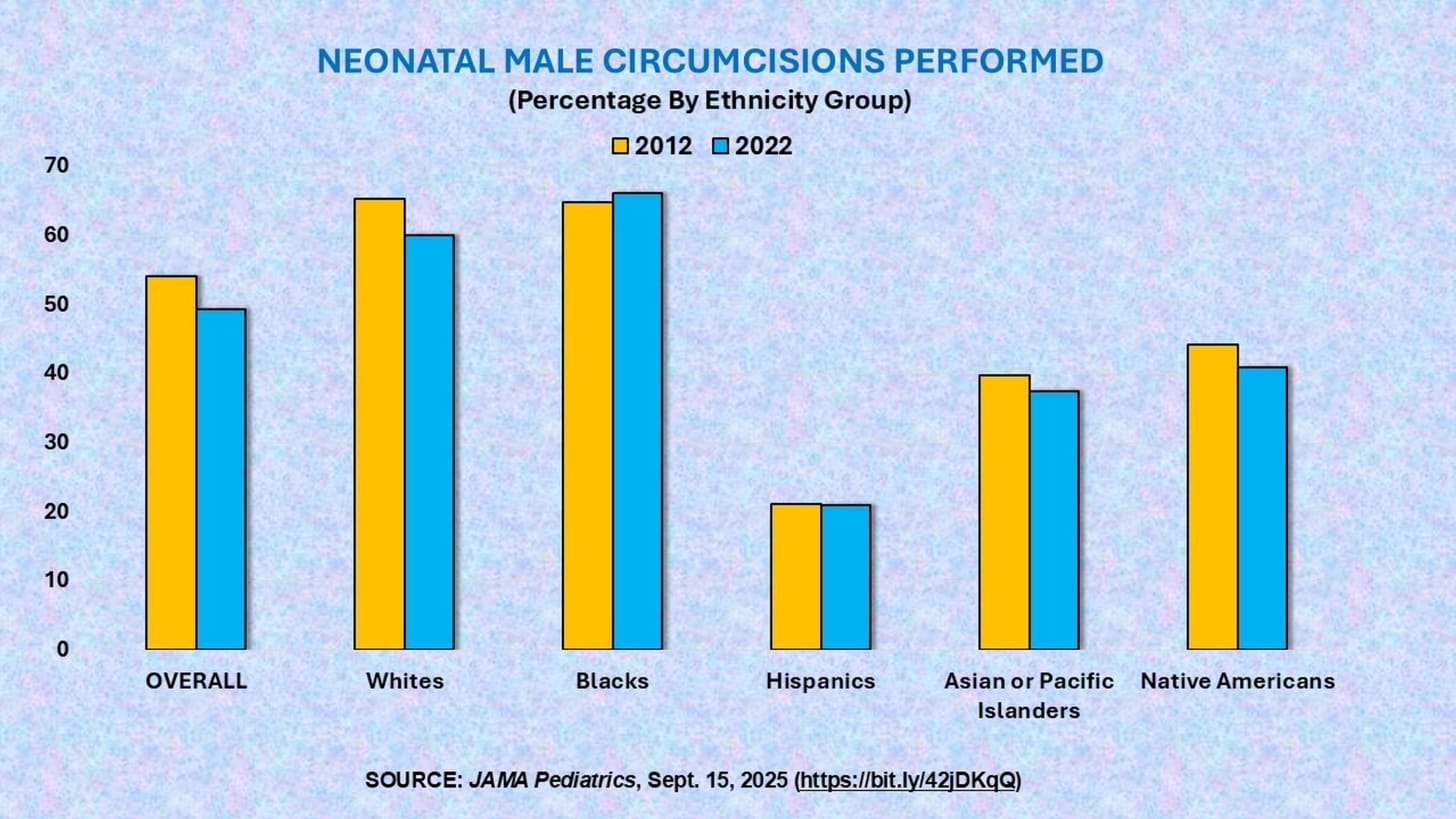
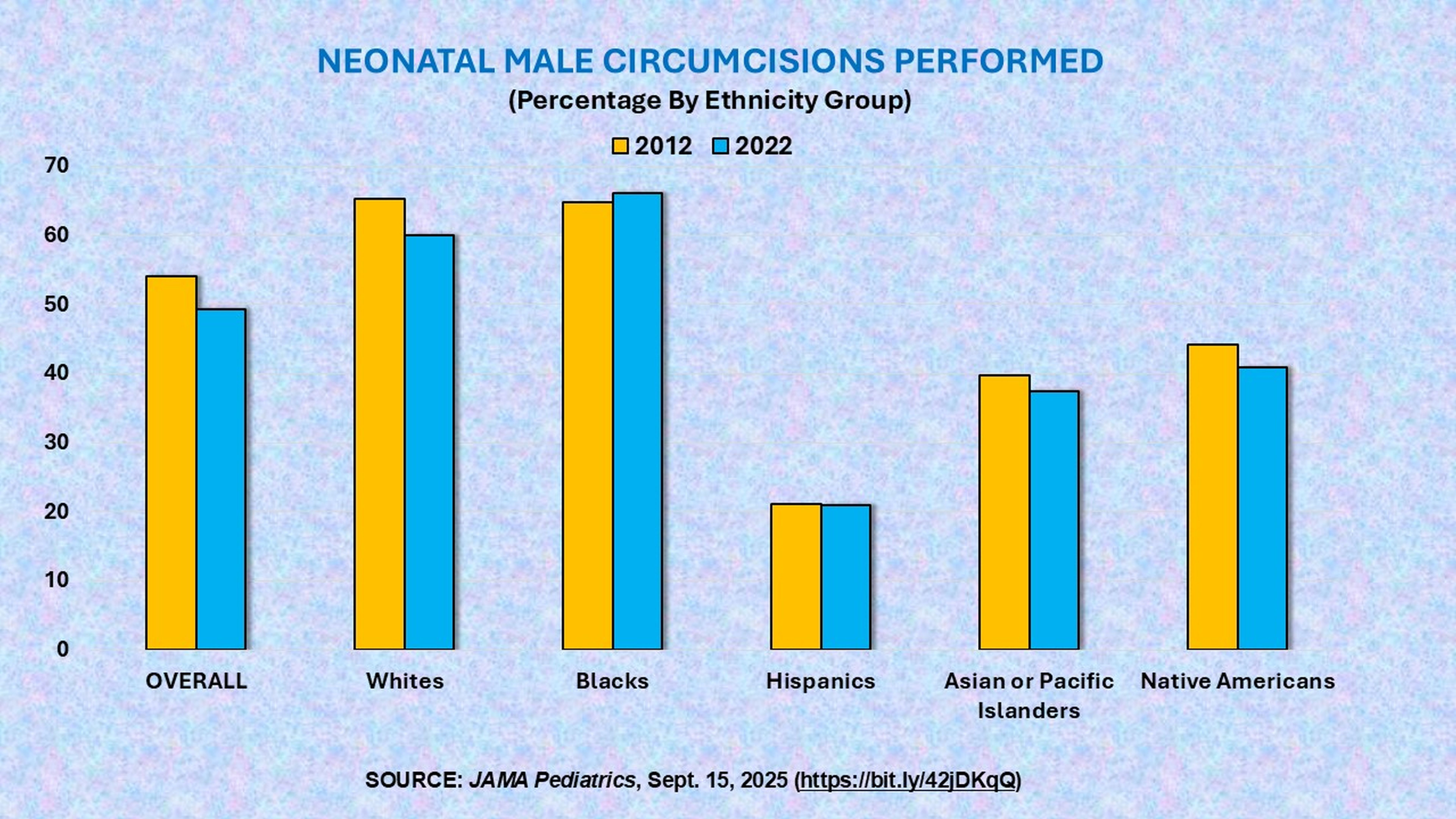
Johns Hopkins Study: Newborn Male Circumcision Rates in U.S. Dropped Between 2012 and 2022, Find the full study here, PDF here
The Case Against Circumcision, by Scott Raab for Esquire
Book: Circumcision: A History Of The World’s Most Controversial Surgery, by David Gollaher.
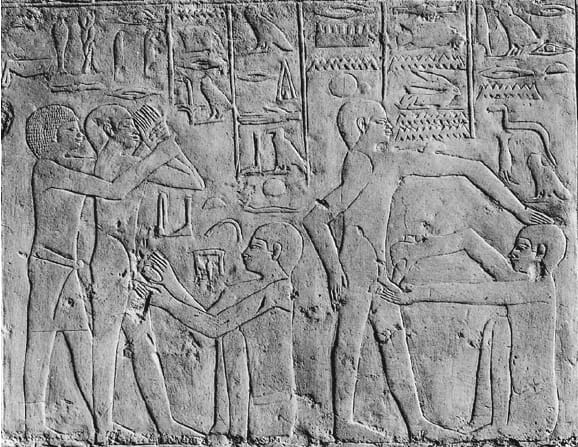
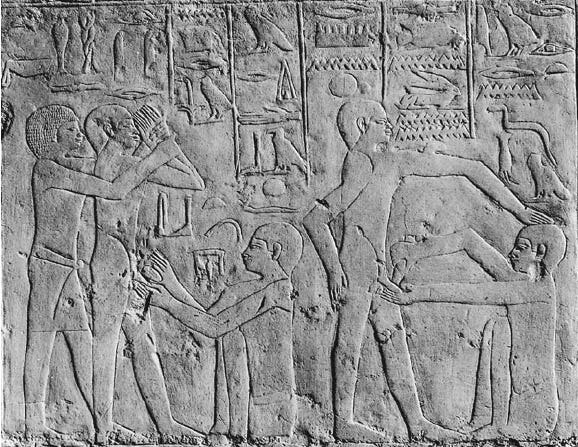
Circumcision scene from Saqqara, Egypt (ca. 2,500-3,000 BC) “Partial Paralysis from Reflex Irritation, Caused by Congenital Phimosis and Adherent Prepuce” (1870), by Lewis Albert Sayre, Recent analysis by Matthew Tontonoz
If You Prick Us: Masculinity and Circumcision Pain in the United States and Canada, 1960–2000, by our guest, sociologist Laura Carpenter.
American Academy of Pediatrics (AAP) statements on circumcision in 1989 (including discussion of 1971 and 1975 recommendations) and 2012.
Intact America’s surveys can be found here, including the 2020 solicitation survey on mothers being asked by healthcare providers about circumcision.
Impact of male circumcision on risk of HIV infection in men in a changing epidemic context – systematic review and meta-analysis These are the randomized controlled trials referred to by Grabowski and Chapin.
The Effects of Medical Male Circumcision on Female Partners’ Sexual and Reproductive Health
Rates of Adverse Events Associated with Male Circumcision in U.S. Medical Settings, 2001 – 2010
Dr. Grabowski responds to charges that the sub-Saharan Africa studies have been discredited, and explains why similar associations between HIV and circumcision status have not been seen elsewhere.
“Those studies have not been discredited. In fact, the three randomized controlled trials conducted in Uganda, Kenya, and South Africa are considered among the strongest pieces of evidence in HIV prevention research and demonstrated a substantial reduction in HIV acquisition among heterosexual men. The findings were sufficiently consistent that the trials were stopped early because of clear benefit.
“The main reason results differ from studies conducted in North America or Europe is that the epidemics and predominant modes of transmission are very different. In sub-Saharan Africa, the trials were conducted primarily among heterosexual men acquiring HIV through vaginal intercourse. In contrast, HIV epidemics in North America and much of Europe are concentrated among men who have sex with men (MSM), where anal intercourse is the predominant mode of transmission. The biological protection associated with circumcision appears much stronger for vaginal sex than for receptive anal sex, which carries substantially higher transmission risk through different mucosal mechanisms.
“There is some evidence suggesting circumcision may reduce HIV risk among MSM who predominantly practice insertive anal sex, but the protective effect is smaller and less consistent than what was observed among heterosexual men in Africa. Many observational studies in Europe and North America also face important limitations, including lower HIV incidence in heterosexual populations, differences in sexual networks, and difficulty adequately controlling for behavioral confounding.
“People sometimes argue that the African findings are not generalizable outside Africa. I do not find that biologically persuasive for heterosexual transmission. There is no evidence that the underlying penile biology differs geographically. Rather, the differences are driven largely by differences in transmission routes, sexual practices, and epidemic structure.”
Grabowski on follow-ups, payments, and satisfaction rates.
“Follow-up across the three major trials was approximately 90%, which is considered excellent retention for longitudinal clinical research. High retention is important because it reduces the likelihood that findings are biased by differential loss to follow-up.
“Participants were not “paid to be circumcised.” As is standard in biomedical research, men in both study arms received modest reimbursement for transportation and time spent attending study visits. These reimbursements were reviewed and approved by ethical review boards and were not considered coercive. Importantly, compensation was not contingent on choosing circumcision.
“With regard to adverse events, the trials carefully monitored complications and published detailed safety data in the world’s top medical journals. Serious adverse events were uncommon across all three studies. Subsequent systematic reviews have similarly found that complication rates are generally low when circumcision is performed in appropriate medical settings by trained providers using sterile technique. When discussing low complication rates, it is important to specify that this refers to procedures performed in safe clinical environments.
“On satisfaction surveys, it is always possible that some degree of social desirability or “white coat” bias influences self-reported outcomes in clinical studies. However, if there had been widespread regret or major dissatisfaction, one would expect that to emerge more clearly across multiple studies and long-term follow-up evaluations. It largely did not. In the Ugandan, female partners were also interviewed, and their responses were generally consistent with those reported by men.”
Grabowski on comparisons to female genital mutilation (FGM), sometimes called “female circumcision.”
“I really would suggest avoiding the term “female circumcision” and instead use the term Female Genital Mutilation (FGM), which is the standard terminology used by major international health organizations. The comparison between male circumcision and FGM is medically and anatomically misleading because the procedures are fundamentally different in extent, intent, and consequences.
“FGM typically involves partial or complete removal of the clitoris and/or other external female genital tissue, often with the explicit purpose of suppressing female sexuality and sexual pleasure. Many forms of FGM are associated with substantial immediate and long-term harms, including severe pain, infection, childbirth complications, sexual dysfunction, and psychological trauma. There are no recognized medical benefits.
“Safe medical male circumcision, by contrast, involves removal of the foreskin covering the tip of the penis. It does not remove the glans itself, which is the primary structure involved in sexual sensation for men. The foreskin does contain nerve endings associated with light-touch sensitivity, and researchers appropriately evaluated sexual satisfaction and function in the HIV prevention trials to assess whether circumcision negatively affected sexual experience. Overall, those studies did not demonstrate major reductions in sexual satisfaction or function.
“Honestly, I think equating the two procedures really minimizes the severity and harms of FGM. From a medical and public health standpoint, they are distinct procedures with very different implications, risk profiles, and ethical contexts.”
For more info on HIV prevention, here’s a debrief on PrEP, shown to reduce the risk of getting HIV by as much as 99%, and you can learn about Doxy PEP here.
Circumcision rates lower in states where Medicaid does not cover procedure, from UCLA
Circumcision Down In U.S., Partly Due To Parental Mistrust Of Doctors, Study Says
Some other miscellaneous stories:
‘Foreskin Man’ Anti-Circumcision Comic Called Anti-Semitic; Could Sway San Francisco Vote. Sadly we didn’t have time to keep this in the episode, but I think the saga of “Foreskin Man” helps illuminate some of the more alienating tactics used by the anti-circumcision movement, which certainly grab attention but may push many people away from grappling with the cause.

Foreskin Man comic book How intactivist’s anti-circumcision movement was co-opted by the alt-right, by Daisy Schofield for Dazed
A Botched Circumcision and Its Aftermath, by Gary Shteyngart for The New Yorker
The Men Who Want Their Foreskins Back, by Bianca Bosker for New York Magazine/The Cut

Any questions we didn’t answer for you? Let us know in the comments below, email us at mannynoahdevan@gmail.com or leave a voicemail at (860) 325-0286.
Lastly, if you’re a fan of the show, please leave us a five-star rating wherever you listen to podcasts and write a nice review. It really helps a lot. Thanks and we’ll be back soon!
This was an interesting episode, especially for me as I'm expecting my first child. I was circumcised, but I had been planning to leave my son uncircumcised. This episode actually made me reconsider that a bit. My assumption was that there were no non-religious reasons for circumcising a child, but that's apparently not true.
I didn't find Georganne very convincing - she seemed too didactic to be objective about this issue, and I didn't think she really addressed the points of the other experts very well. I didn't like how she hand-waved the use of antibiotics - antibiotics are a great and powerful tool, but they wreak havoc on our gut biomes and should be used thoughtfully. I would imagine that's especially true for babies.
I would have appreciated some fact checking on one fact in particular: one expert claimed that the foreskin is the most erogenous part of the penis, while another claimed that the foreskin does not contribute to sexual function, and that the glans is where sexual pleasure takes place. It also feels a little weird that all the expert voices in this piece were female. Anyway, I'm not sure I've changed my mind per se, but it got me thinking about it again, which I appreciate.
" why does this issue in particular seem to get people so intensely fired up?" Um, when you are talking about cutting off a body part, especially in that part of the body, an intense reaction seems reasonable